One meal. Two versions. Zero compromise.
SplitPlate uses a simple but powerful technique to adapt any recipe for two different dietary needs — without cooking twice. Here's how it works.
The two-meal trap
You want Thai green curry. Your partner wants something mild. One of you is gluten-free, or avoiding nightshades, or just doesn't like heat. So you cook two completely separate meals — doubling your time, effort, and dishes.
This happens every night in households across the world: families with picky eaters, couples with different dietary needs, anyone cooking for a guest with restrictions. The result is always the same — extra work and someone eating a compromise.
The solution isn't giving up on the meal you want. It's finding the exact moment in the recipe where the two versions diverge — and that's precisely what the Split Point method does.
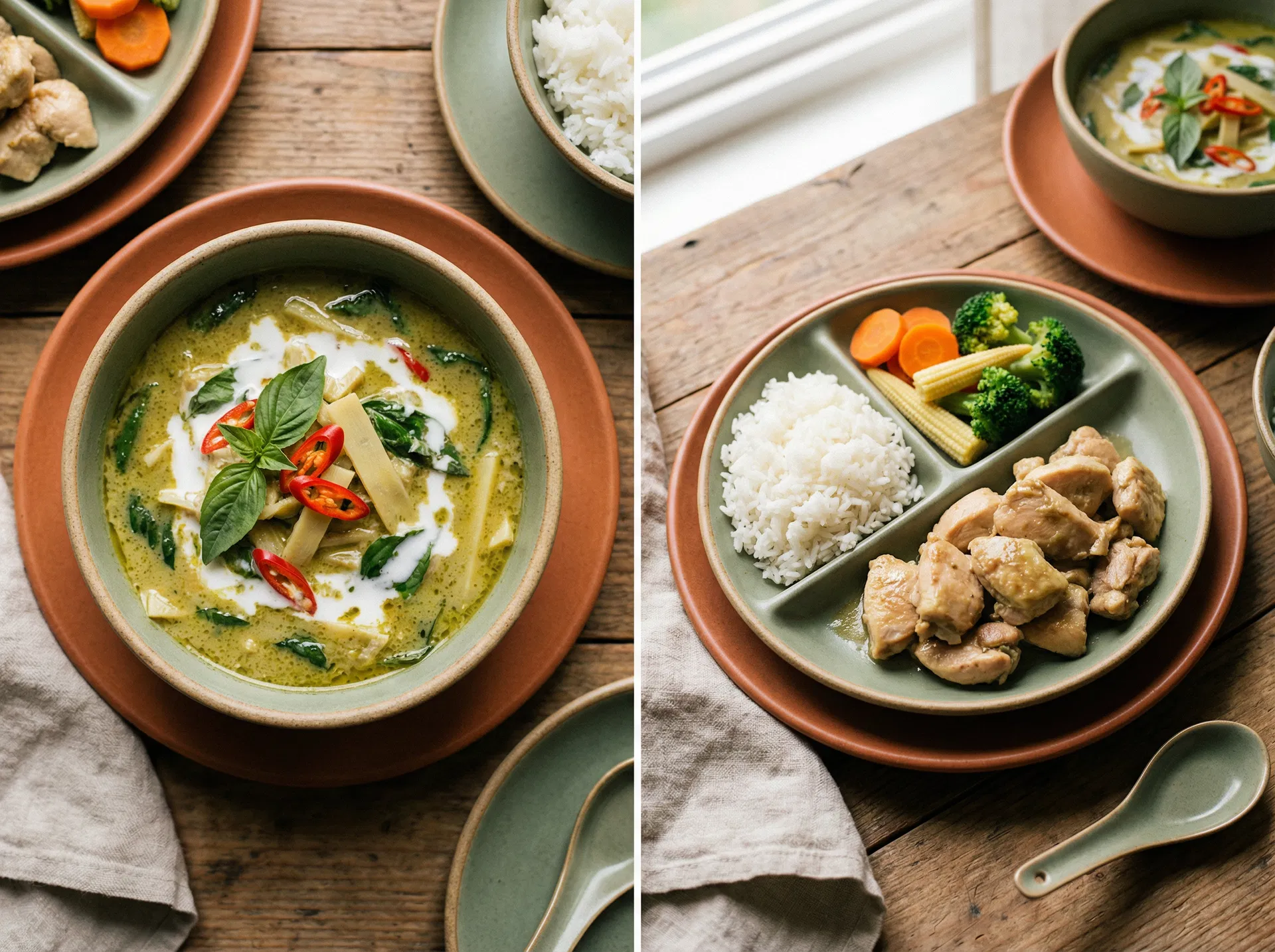
Same ingredients. Different presentation.
How the Split Point works
Every recipe follows the same simple three-step pattern.
Cook the shared base
Start cooking as normal. The first steps are always shared — boiling pasta, browning meat, steaming rice. Both versions use the same foundation.
Hit the Split Point
This is the key moment. Before you add the bold spices, complex sauces, allergens, or dietary-specific ingredients, set aside one portion. It takes 30 seconds and saves you from cooking twice.
Finish both versions
Continue the first version with all the flavors you want. Meanwhile, the second portion gets its own treatment — milder seasoning, a different sauce, or an allergen-free finish. Both plates are ready at the same time.
Strategies we use
Techniques that work for families, couples, and anyone cooking for different tastes or dietary needs.
Deconstructed Meals
Instead of mixing everything together, serve the same ingredients as separate components. A stir-fry becomes plain noodles, steamed veggies in groups, and sauce on the side — perfect for picky eaters, spice-sensitive diners, or anyone who prefers their food separated.
Example: Chicken stir-fry → plain rice + chicken pieces + veggies in separate piles + soy sauce for dipping
The Split Point Method
Every recipe has a natural moment where you can branch off one portion before adding bold spices, allergens, or dietary-specific ingredients. We mark this exact step so you never have to guess.
Example: Curry → remove one portion in coconut broth BEFORE adding curry paste and chilies
Parallel Prep
Some steps can run side-by-side — one person handles the spiced version while the other finishes the mild one. The AI identifies these parallel moments so both versions are ready at the same time.
Example: Pasta sauce: simmer with chili flakes for one portion, keep plain with herbs for the other
Dietary Bridges
Build a shared base that works for both dietary profiles, then diverge only where needed. This minimises extra ingredients and keeps cooking time short, whether you're navigating allergies, preferences, or health goals.
Example: Grilled chicken + roasted veg base → one plate gets the tahini sauce, the other gets the low-FODMAP dressing
Ready to try it?
Browse our curated recipes with built-in Split Points, or paste your own recipe and let our AI find the perfect adaptation.